


Leadership in today’s world calls for far more than a charismatic personality. Real leadership is defined by clarity, integrity, emotional intelligence, and a willingness to grow. Whether guiding a small team or steering a multinational organization, the leaders who excel understand both people and purpose.
This article explores the essential leadership qualities that shape effective leaders, how different leadership styles operate, and why strong leadership continues to be a decisive force in organizational success.
What Is Leadership? A Modern Definition
Leadership has evolved into a discipline that blends character, competence, and influence. Rather than relying only on authority, effective leaders build trust, communicate clearly, and guide teams toward shared goals.
Harvard’s leadership research highlights that modern leadership integrates personal qualities, adaptive behaviors, and the ability to read organizational context. That means leadership isn’t simply telling people what to do; it’s aligning purpose, people, and performance.
This definition mirrors what former Navy SEAL Jason Redman teaches through programs such as the Overcome Mindset Course, which emphasizes resilience, responsibility, and mental discipline, and the Pointman for Life Program, which focuses on clarity and long-term direction.
15 Leadership Qualities Every Good Leader Should Possess
1. Integrity
Integrity forms the moral backbone of leadership. It involves making decisions based on values rather than convenience. A leader with integrity builds trust because their actions match their words.
Research referenced by Harvard Business Review finds that organizations whose leaders receive high “character” ratings, including ethical clarity, integrity, and empathy, tend to show substantially higher returns on assets compared with those led by lower-character leaders. Integrity makes a leader predictable in the best possible way; people know what they stand for and what they will not compromise.
2. Accountability
Accountability strengthens credibility. Leaders who accept responsibility for decisions, even when outcomes fall short, set a standard for the entire team. Jason Redman’s story of the Sign on the Door, now widely recognized as a model of personal responsibility, illustrates the power of refusing excuses. When leaders take ownership, it encourages a culture where team members feel safe admitting mistakes, learning, and improving.
3. Clear Communication
Communication is the lifeline of leadership. A leader who articulates expectations clearly reduces confusion, increases alignment, and improves performance. Research shows that communication problems cause nearly 60% of workplace challenges. Great leaders speak plainly, listen actively, and ensure that every team member understands both the “what” and the “why.”
4. Active Listening
Active listening is the ability to fully hear, understand, and respond thoughtfully to others. Leaders who listen create psychological safety and inspire honest dialogue. This quality strengthens relationships and helps leaders anticipate concerns before they escalate. When people feel heard, they contribute more openly, and trust grows naturally.
5. Emotional Intelligence
Emotional intelligence is the skill that binds every other leadership quality together. Leaders with emotional intelligence understand their own emotions and recognize the feelings of others. They remain composed under pressure, adjust to stressful moments, and navigate conflict with maturity. Emotional intelligence boosts team morale, increases collaboration, and improves decision-making.
6. Vision
Vision gives direction. Without a clear vision, teams lack purpose and momentum. Visionary leaders anticipate future challenges, understand market shifts, and create long-term strategies. A strong vision inspires confidence because it provides a roadmap, even during uncertainty. It also encourages innovation by showing the team where they are heading and why their work matters.
7. Adaptability
Adaptability allows leaders to respond to unexpected challenges without losing effectiveness. Whether managing organizational change, market disruption, or new technology, adaptable leaders stay calm and adjust their approach.
Research from Creighton University highlights adaptability as one of the most critical modern leadership characteristics, particularly in fast-moving industries where flexibility determines long-term viability.
8. Decision-Making Ability
Decision-making is a defining leadership responsibility. Effective leaders gather information, assess risks, and choose a course of action confidently. They avoid hesitation and understand that delaying a decision can be more damaging than making a difficult one. Strong decision-makers remain objective, consider long-term implications, and adjust when new evidence emerges.
9. Problem-Solving Skills
Problem-solving requires analytical thinking, creativity, and emotional discipline. Leaders who excel at solving problems pay attention to details while keeping the larger picture in mind. They seek input from team members, consider diverse perspectives, and evaluate possible solutions based on evidence. Effective problem-solving reinforces trust and improves organizational performance.
10. Resilience
Resilience equips leaders to remain steady during adversity. Jason Redman’s documented recovery journey, highlighted on the Meet the Team, demonstrates resilience not as a personality trait but as a trained mindset built through discipline and purpose. Resilient leaders avoid emotional burnout and inspire others to push forward during challenging times.
11. Empathy
Empathy enables leaders to understand how others feel and why they respond the way they do. It helps prevent conflict, builds stronger relationships, and increases loyalty. Leaders who show empathy create a supportive work environment that encourages open communication and strengthens team cohesion.
12. Delegation
Delegation is an essential leadership competency because it demonstrates trust in a team’s abilities. Leaders who delegate effectively avoid burnout, develop team members’ skills, and ensure the organization moves efficiently. Proper delegation requires clarity, trust, and the ability to let go of control while still guiding the outcome.
13. Confidence
Confidence gives teams a sense of direction and stability. It is not boastfulness but the quiet certainty that comes from preparation and experience. Confidence is linked closely with personal growth, and Jason Redman’s training on how to be confident emphasizes habits that strengthen internal belief and presence.
14. Humility
Humility ensures leaders stay open to feedback, acknowledge mistakes, and value the contributions of others. A leader who demonstrates humility prevents ego from obstructing progress. Research from Northeastern University emphasizes that humble leaders create more innovative and collaborative teams because they encourage diverse ideas.
15. Ability to Inspire and Motivate Others
Great leaders motivate through purpose, not pressure. They use storytelling, vision, and authenticity to inspire commitment. Programs such as Jason Redman’s work as a motivational speaker show how effective communication and vulnerability can ignite performance and create a deep sense of unity within teams.
Different Leadership Styles: When Each Style Works
Leadership qualities form the foundation of strong leaders, but understanding leadership styles determines how these qualities are applied. Each leadership style thrives in different situations, and the most effective leaders recognize when to shift their approach.
Democratic leadership excels when collaboration and creativity are essential. It empowers team members by involving them in decision-making, which increases buy-in and encourages innovative thinking. This style works well in organizations that value collective intelligence.
Autocratic leadership is most effective when quick action is needed or when a team requires clear direction. In crises, such as emergencies or time-sensitive decisions, this style ensures decisive action and prevents confusion.
Transformational leadership motivates teams by focusing on purpose, vision, and long-term growth. Transformational leaders inspire others through enthusiasm and authenticity, making this style particularly effective in industries experiencing rapid innovation or major strategic shifts.
Transactional leadership relies on structure, performance metrics, and reward systems. This style is ideal for roles where consistency, productivity, and measurable outcomes drive success. It creates clarity through defined expectations and rewards.
Servant or coaching leadership prioritizes team development and individual growth. This style strengthens relationships, improves morale, and creates loyal, high-performing teams. It works well when developing new talent or building long-term capability.
Laissez-faire leadership offers autonomy by trusting team members to manage their own responsibilities. It works best with highly skilled or creative professionals who thrive with independence. When used appropriately, it fosters innovation and ownership.
The most effective leaders transition between styles depending on their team, environment, and objectives.
Why Leadership Qualities Matter Today
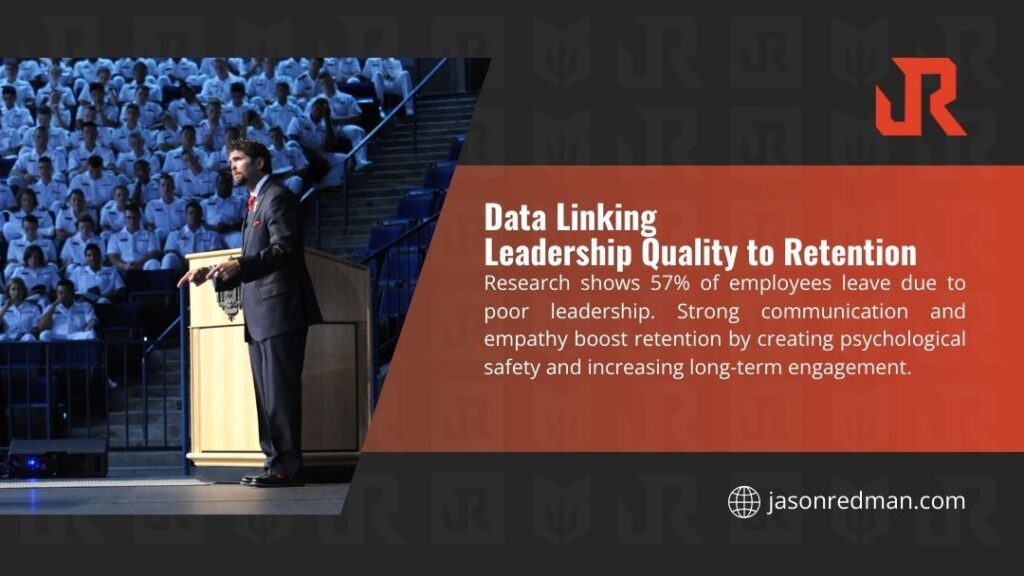
Leadership qualities directly influence performance, retention, culture, and long-term stability. A study by Gallup found that managers account for 70% of the variance in employee engagement worldwide. Leaders with strong communication skills, empathy, and integrity consistently drive high engagement and healthier work environments.
When leadership breaks down, organizations face:
• high turnover
• low morale
• poor collaboration
• stagnation
• loss of trust
Effective leadership, by contrast, builds trust, clarity, and commitment, which directly support organizational goals.
How to Develop Leadership Qualities? A Practical Path
Leadership is built through conscious effort, honest reflection, and disciplined practice. The process begins with identifying personal strengths and weaknesses. Leaders improve when they understand their behaviors, communication patterns, and emotional responses. Self-awareness strengthens emotional intelligence, allowing leaders to recognize how their actions influence others.
Growth happens through consistent practice. Leaders can develop skills by applying daily habits such as clarifying expectations, listening without interruption, and reflecting on difficult interactions. Courses like the Overcome Mindset program provide practical frameworks that help leaders build resilience, clarity, and purpose.
Mentorship accelerates development by offering perspective and accountability. Experienced leaders who provide honest feedback help rising leaders adapt styles, strengthen decision-making, and understand complex workplace dynamics. Reading, formal training, and leadership coaching offer structured learning that supports long-term growth.
Leadership development thrives on reflection. Leaders who regularly evaluate their performance, analyze failures, and seek feedback evolve faster than those who rely solely on experience. Growth also comes from stretching beyond comfort zones, whether by leading new projects, managing different teams, or facing unfamiliar challenges.
Leadership in the Modern Work Environment
The modern workplace demands leaders who are adaptable, communicative, and emotionally intelligent. Remote and hybrid work environments require intentional communication because team members no longer rely on physical presence to stay connected. Leaders must be proactive in establishing clarity, setting expectations, and ensuring every person feels included, regardless of location.
Global teams introduce new challenges and opportunities. Cultural intelligence becomes essential because communication styles, work expectations, and problem-solving preferences differ across regions. Leaders with empathy and flexibility navigate these differences effectively, building inclusive environments where diverse voices contribute equally.
Technology also influences modern leadership. Digital collaboration tools require leaders to learn new communication methods while maintaining human connection. Strong leadership qualities help ensure technology supports productivity rather than creating distance.
The pace of change is high, and leaders must guide teams through shifting priorities and evolving strategies. Adaptability, emotional intelligence, and clear communication remain at the center of effective modern leadership.
Common Leadership Mistakes and How to Avoid Them
Leadership mistakes often arise not from lack of knowledge but from habits that go unaddressed. One common mistake involves depending too heavily on a single leadership style.
Leaders who remain autocratic in collaborative environments or overly democratic during urgent situations create confusion and frustration. Another mistake stems from neglecting emotional intelligence, which leads to misunderstandings, conflict, and poor team morale.
Micromanagement is another challenge, often caused by fear of failure or lack of trust. When leaders control every detail, team members feel restricted and less capable, which lowers creativity and engagement. Poor communication also contributes to leadership breakdowns, creating uncertainty and reducing accountability.
Leaders can benefit from reviewing mistakes objectively. The table below outlines common pitfalls and their consequences in a simple, clear structure.
| Leadership Mistake | Impact on Team | How to Correct It |
| Overusing one leadership style | Creates confusion and mismatched expectations | Adapt style based on team and situation |
| Micromanaging | Reduces trust and limits creativity | Delegate intentionally and focus on outcomes |
| Poor communication | Causes misunderstandings and weak alignment | Clarify expectations and encourage open dialogue |
| Avoiding accountability | Damages credibility and morale | Take responsibility and model ownership |
| Ignoring emotional cues | Increases conflict and frustration | Strengthen emotional intelligence through reflection |
Leaders who observe their patterns and adjust proactively stay effective and respected.
How Organizations Measure Leadership Effectiveness?
Organizations evaluate leadership effectiveness through structured assessments that analyze behavior, communication, team outcomes, and strategic impact. Tools like the Multifactor Leadership Questionnaire (MLQ) offer insight into transformational and transactional leadership behaviors, helping organizations identify strengths and areas for development.
Performance reviews, peer feedback, and employee engagement surveys highlight how leaders influence morale, productivity, and culture. Behavioral assessments examine communication styles, conflict management abilities, and decision-making patterns. Leadership style assessments help leaders understand how their approach aligns with organizational needs.
Advanced organizations also review results such as turnover rates, team performance metrics, and innovation indicators. These measurements reveal how leadership qualities translate into organizational outcomes and long-term success.
Building Leaders for the Future
Leadership qualities determine how teams respond to change, navigate challenges, and pursue long-term goals. Strong leaders combine integrity, accountability, emotional intelligence, and adaptability with a clear vision and the ability to inspire others. These qualities are not fixed traits but skills that grow through practice, reflection, and guided development.
Today’s workplace rewards leaders who communicate clearly, understand their people, and remain resilient in uncertainty. Whether developing leadership skills through structured programs, learning from an experienced leadership speaker, or refining daily work habits, every leader can evolve. Strong leadership shapes teams, transforms organizations, and creates environments where people feel motivated to contribute at their highest level.