

Most companies think morale comes from fun. It doesn’t. It comes from ownership, leadership, and the standards people choose to live by every day. In this article, we explain how to boost employee morale at company events by shifting from surface-level engagement to real performance-driven change, and how the right message can reshape an entire team.
How to Boost Employee Morale at Company Events
Walk into most corporate events, and you’ll see the same pattern. Music’s playing, people are smiling, there’s food, maybe a game or two. On the surface, everything looks right. But talk to people a week later, and nothing has changed. That’s the disconnect.
If you’re trying to figure out how to boost employee morale at company events, you have to start by asking a harder question: Did this event actually move people forward? Because morale isn’t about the moment. It’s about what sticks.
Real morale shows up when employees take responsibility instead of deflecting, push harder when things get uncomfortable, and hold themselves to a higher standard. That shift doesn’t happen through entertainment. It happens through challenge, clarity, and leadership.
And that’s exactly why companies that want real impact don’t just plan events, they bring in voices that force people to think differently. A proven motivational speaker doesn’t just energize a room. They change how people operate after the room clears.
Why Most Company Events Fail to Improve Morale
The problem isn’t effort. Companies invest time, money, and resources into events. The problem is direction.
| What Companies Do | What Actually Happens |
| Plan fun activities | Short-term excitement |
| Focus on entertainment | No behavioral change |
| Avoid difficult conversations | Low accountability remains |
| Skip leadership alignment | Teams stay disconnected |
Morale doesn’t improve because nothing fundamentally shifts. People don’t need another icebreaker. They need a reason to care again.
8 Powerful Ways to Boost Employee Morale at Company Events
Creating a high-impact event isn’t about adding more. It’s about being intentional with what you include.
| Element | What Most Companies Do | What Actually Works |
| Venue | Choose convenience | Choose an environment that inspires focus |
| Theme | Generic or seasonal | Align with company mission |
| Food | Basic catering | Use shared experiences to build a connection |
| Activities | Random games | Purpose-driven engagement |
| Agenda | Packed schedule | Strategic pacing with impact moments |
| Leadership presence | Minimal involvement | Active participation and visibility |
| Speaker | Optional add-on | Core driver of transformation |
| Follow-up | None | Reinforcement and accountability |
When these elements align, the event stops being just another gathering and starts becoming a catalyst.
What Actually Drives Employee Morale?
Morale is often misunderstood. It’s not about happiness. It’s about belief. When people believe they matter, believe they can improve, and believe their work has meaning, morale rises. But here’s what most companies miss. Those beliefs don’t come from perks. They come from pressure, accountability, and clarity.
| Core Driver | What It Looks Like in Practice | Impact on Workplace Morale |
| Ownership | Employees take responsibility without being told | Builds confidence and trust |
| Purpose | Teams understand why their work matters | Increases commitment |
| Standards | Clear expectations with no shortcuts | Creates consistency |
| Growth | People are pushed to improve, not stay comfortable | Drives engagement |
| Recognition | Effort and performance are acknowledged with meaning | Reinforces behavior |
According to Gallup, teams that feel engaged and recognized outperform others significantly in productivity and retention. That’s not about perks, it’s about how people feel about their role.
This is where leadership messaging becomes critical. When a message connects discipline with purpose, people stop seeing work as an obligation and start seeing it as an opportunity.
The Role of Internal Events to Boost Employee Morale
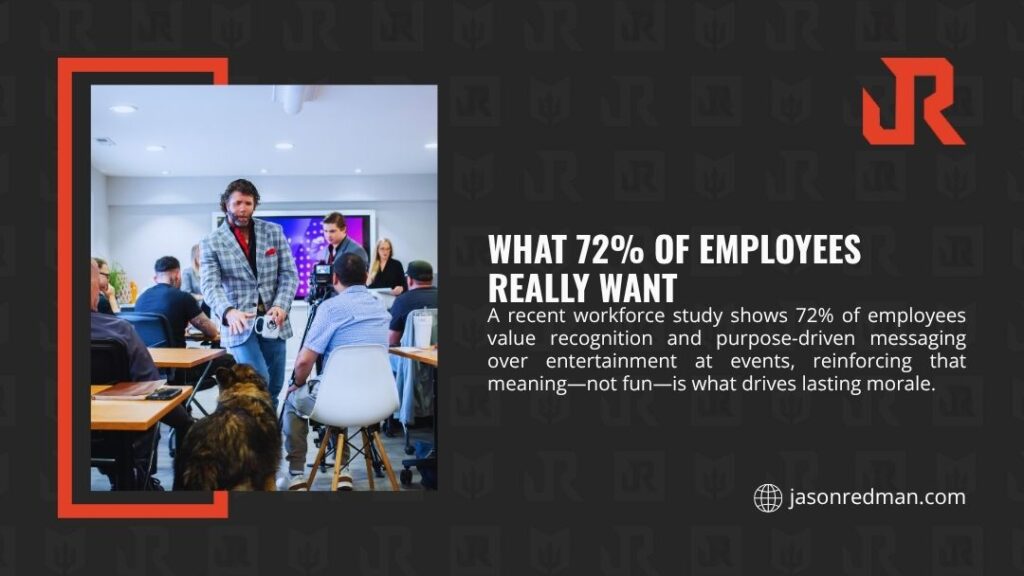
Not every morale shift needs a big stage. Internal events, when done right, can create consistent momentum. The key is intent. An internal event should never feel like a break from work. It should feel like an extension of your culture.
When internal events focus on reflection, recognition, and real conversations. They build trust within teams. But when they focus only on fun, they become forgettable.
| Internal Event Type | Purpose | Result |
| Leadership roundtables | Open conversations | Stronger alignment |
| Recognition sessions | Highlight performance | Increased motivation |
| Skill-building workshops | Develop capabilities | Long-term growth |
| Team accountability reviews | Address gaps honestly | Higher standards |
Internal events aren’t about scale. They’re about consistency. Done right, they reinforce culture week after week, not just once a year.
Types of Corporate Events That Boost Employee Morale
Not all events are created equal. Some entertain. Others transform. The difference lies in intention and execution.
| Event Type | Best Use Case | Morale Outcome |
| Leadership keynote events | Company-wide gatherings | Strong mindset shift |
| Team-building retreats | Mid-size teams | Improved trust and connection |
| Performance workshops | Leadership teams | Higher accountability |
| Recognition ceremonies | Annual events | Reinforced culture |
| Strategy offsites | Executive groups | Alignment and clarity |
Events that combine learning with emotion tend to create the strongest morale boost. That’s why companies often look for a corporate speaker who can bridge experience with action.
The Turning Point: Creating a Moment That Changes Perspective
Every event has a moment where things shift. It’s not planned, but it happens when something hits differently. Someone hears a story and sees themselves in it. Someone realizes they’ve been holding back. Someone decides they’re done making excuses. That moment matters more than anything else on the agenda.
| Type of Moment | What Happens | Why It Matters |
| Emotional connection | People relate personally | Builds trust |
| Challenge moment | Comfort zone is disrupted | Sparks growth |
| Realization | Self-awareness increases | Drives change |
| Commitment | Decision to act differently | Creates momentum |
Without that moment, the event fades. With it, the event becomes a turning point.
Why Leadership Messaging Matters More Than Activities
You can run all the team engagement activities you want. Without leadership alignment, nothing sticks. Employees watch what leaders tolerate. They watch what leaders reward. And they watch whether leaders live the same standards they talk about.
That’s why bringing in someone who has led in high-stakes environments changes the conversation. It’s no longer theoretical. It’s real.
If you’re planning an event and want it to matter, understanding how to match a speaker to your audience becomes critical. The wrong message falls flat. The right message creates momentum.
Real Morale Boosters vs. Surface-Level Fixes
There’s a difference between what feels good in the moment and what creates long-term morale.
| Surface-Level Fix | Real Morale Booster |
| Office games | Accountability mindset |
| Free perks | Purpose-driven leadership |
| Casual recognition | Earned respect and trust |
| One-time events | Consistent performance culture |
Here’s the thing: people don’t stay motivated because of perks. They stay motivated because they feel challenged, valued, and capable.
The Role of a Keynote Speaker in Transforming Events
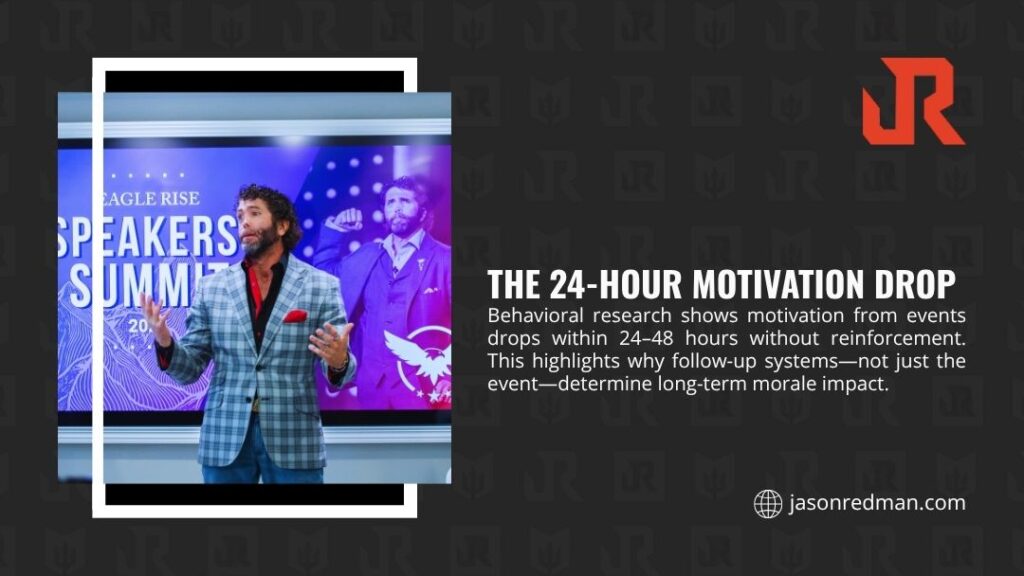
A keynote speaker isn’t there to fill time. They’re there to set the tone. The right speaker doesn’t just talk. They create a shift in how people think about leadership, performance, and responsibility.
When companies understand the real benefits of hiring a motivational speaker for corporate events, they stop treating it as a cost and start seeing it as an investment. Because when your people change, your company changes.
What Happens After the Event Matters More Than the Event Itself
Most organizations measure success based on how the event felt. That’s the wrong metric. The real question is, what changed?
| Measurement Area | What to Look For |
| Employee mindset | Increased ownership |
| Team dynamics | Stronger accountability |
| Leadership behavior | Clear expectations |
| Performance metrics | Improved consistency |
If nothing changes after the event, morale didn’t improve. It just paused.
Why Elite Teams Approach Morale Differently
Elite teams don’t chase morale. They build it through discipline. They don’t wait for events to feel motivated. They create systems that demand consistency.
| Average Teams | Elite Teams |
| Depend on motivation | Depend on standards |
| Avoid discomfort | Embrace challenge |
| Focus on short-term wins | Focus on long-term growth |
| Wait for direction | Take ownership |
That’s the difference. Morale in elite environments isn’t fragile. It’s earned.
FAQs
What are the 5 C’s of employee engagement?
The 5 C’s typically include clarity, connection, contribution, credibility, and culture. These elements shape how employees feel about their role and their organization.
How to improve morale at work with activities?
Activities work best when they connect to purpose. Instead of random games, focus on experiences that build trust, accountability, and shared goals.
What are 5 areas of improvement for employees?
Communication, accountability, adaptability, leadership skills, and consistency are often the most impactful areas for growth.
How to boost employee morale at company events quickly?
Create a strong emotional moment, involve leadership, and deliver a message that challenges employees to think differently.
How to encourage employees to participate in events?
Make the event relevant to their growth. When employees see value, participation increases naturally.
What engages employees the most at events?
Authenticity, real stories, leadership presence, and opportunities to reflect and grow engage employees more than surface-level activities.
Ready to Create an Event That Actually Moves the Needle?
Here’s what it comes down to. Events don’t fix morale. People do. Events create opportunities. People decide what to do with them. If your event doesn’t challenge people, it won’t change them. If it doesn’t raise standards, it won’t improve performance.
But when it does, everything shifts. Teams become stronger. Leaders become sharper. Culture becomes real.
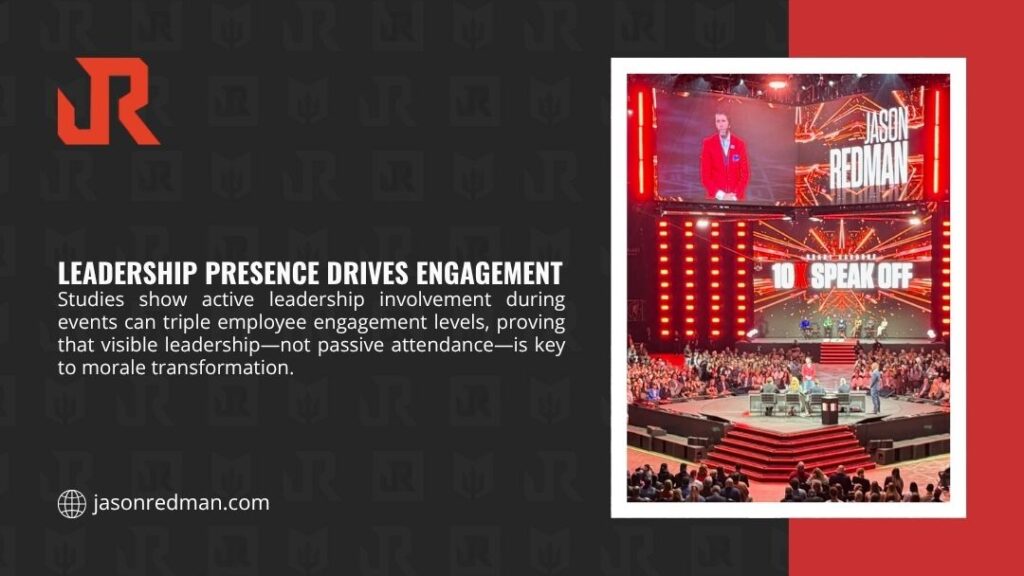
If you’re serious about creating that kind of impact, it starts with bringing in the right voice at the right time. Learn how to book a keynote speaker who creates real change and turn your next event into something that actually matters. Because average events entertain. Elite events transform.