

Do keynote speakers make a difference? Yes, but not in the way most people assume. The right keynote speech can shift how people think, act, and perform long after the event ends. The wrong one becomes background noise. This article breaks down what actually creates impact, where the business value comes from, and how to tell if hiring a speaker is worth it.
Do keynote speakers make a difference?
Do keynote speakers make a difference? The short answer is yes, but only when the message, delivery, and audience alignment are right.
A keynote speech is not just another presentation. It often sets the tone for the entire event, especially when placed as the opening or closing session. When done well, it creates a shared mindset across teams and reinforces the purpose behind the gathering.
But here’s the thing: Simply hiring a speaker does not guarantee results. Research shows that the right keynote speaker can boost event impact for 85% of attendees, while poor alignment leads to disengagement.
So the real question isn’t just do keynote speakers make a difference, it’s when and how they make a difference.
Why a keynote speech still matters in the public speaking business
In today’s digital-first world, information is everywhere. Yet live communication still carries a unique weight. A keynote speech works because it delivers something static content cannot: a real-time human connection, emotional engagement, and shared experience.
Studies show that 78% of attendees consider keynote speakers a key factor in deciding whether to attend an event. That means the speaker isn’t just part of the agenda; they’re often the reason people show up.
From a public speaking business perspective, keynote sessions serve as the anchor point. They align the audience, reinforce the event theme, and create momentum for everything that follows.
What difference does a leadership keynote make for organizations?
A strong leadership keynote goes beyond inspiration. It shapes behavior. Organizations that use keynote speakers strategically see measurable outcomes. According to research:
| Business Outcome | Measurable Impact |
| Adoption of new initiatives | 47% faster |
| Employee engagement | 34% higher |
| Openness to new ideas | 62% increase |
These numbers matter because they connect speaking to real business performance. A well-delivered keynote speech helps teams to understand expectations clearly, align around a shared mission, and build accountability.
This is where speakers like a seasoned leadership speaker make a difference; they translate complex ideas into actions people can actually use.
When keynote speakers truly make a difference, and when they don’t
Not every keynote works. That’s the uncomfortable truth most people avoid. Here’s what separates impact from noise:
| When they work | When they fail |
| Message matches audience needs | Generic, one-size-fits-all talk |
| Speaker brings real-world credibility | Overly theoretical content |
| Clear takeaway and next steps | No practical application |
| Emotion + logic combined | Pure motivation with no direction |
Research supports this gap. While 92% of audiences report positive feedback, only a portion translates that into sustained behavior change unless the message is actionable. So yes, do keynote speakers make a difference, but only when execution is deliberate.
The real business case: attention, retention, and action
The value of a keynote speaker shows up in three areas: attention, memory, and behavior.
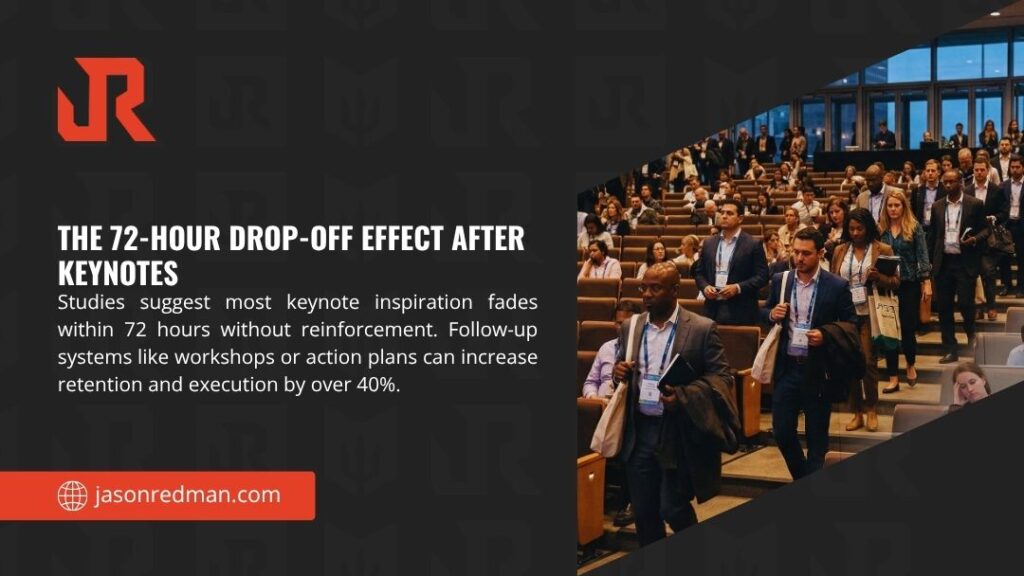
First, attention. Studies show audience impressions form within the first few seconds of a speaker’s delivery, which shapes how the entire message is received.
Second, retention. Conferences increase idea adoption significantly, and live presentations boost idea diffusion by over 62.5% compared to passive exposure.
Third, action.
Impact of Keynote Speaking Events
| Metric | Verified Insight |
| Sales impact | Companies with highly engaged employees can see up to 21% higher profitability |
| Brand trust | 92% of people trust recommendations from individuals over brands, including expert speakers |
| Long-term engagement | Story-driven communication improves message retention |
That’s where keynote speakers move beyond inspiration; they influence outcomes.
Keynote speaker vs motivational speaker: what’s the real difference?
At first glance, the two roles seem interchangeable. Both stand on stage, both deliver a keynote speech, and both aim to influence the audience. But the difference shows up in what happens after the applause fades.
A keynote speaker is typically brought in to support a specific business objective. Their message connects directly to the event’s theme, often shaping how attendees think about leadership, performance, or strategy. A motivational speaker, on the other hand, focuses more on emotional energy and short-term inspiration.
Here’s a clearer breakdown:
| Factor | Keynote Speaker | Motivational Speaker |
| Primary role | Aligns with event theme | Boosts morale and energy |
| Message depth | Strategic and structured | Emotional and uplifting |
| Business relevance | High | Varies |
| Longevity of impact | Long-term mindset shift | Short-term motivation |
| Typical use | Conferences, leadership events | Team morale sessions |
That distinction matters more than most planners realize. If the goal is transformation, clarity, and alignment, a keynote speaker usually delivers stronger results. If the goal is a quick energy boost, a motivational speaker may do the job.
What great keynote speakers do differently
Not all keynote speakers create impact. The difference between average and exceptional comes down to preparation, delivery, and relevance.
Great keynote speakers don’t rely on a single polished talk. They study the audience, understand the company’s challenges, and adjust their message accordingly. That level of customization is often what separates a memorable session from a forgettable one.
They also bridge the gap between story and strategy. Anyone can tell a compelling story, but top speakers connect that story to a real-world application. They give people something to act on, not just something to feel.
Another defining trait is clarity. The best speakers simplify complex ideas without losing meaning. They leave the audience with a clear takeaway that can be used immediately in the workplace.
This is why many organizations invest time in understanding what makes a good public speaker before making a decision. It’s not about charisma alone. It’s about relevance, structure, and credibility.
How to tell if your event actually needs a keynote speaker
Not every event benefits from a keynote speaker. The decision should come down to intent, audience size, and desired outcomes.
If your event is meant to align leadership, reset company culture, or introduce a major shift in direction, then a keynote speaker plays a critical role. In those moments, the keynote becomes the central message that ties everything together.
On the other hand, if the event focuses on skill development or technical training, a workshop or breakout session might provide more value.
Here’s a practical way to evaluate the need:
| Question | If Yes | If No |
| Do you need to align a large group around one message? | Keynote recommended | Not essential |
| Is your event focused on mindset or culture? | High value | Moderate value |
| Are attendees expecting inspiration and direction? | Strong fit | Limited impact |
| Is the event small and highly technical? | Lower priority | Consider alternatives |
Another factor to consider is audience expectation. At larger conferences, attendees often expect a keynote as part of the experience. Without it, the event can feel incomplete.
Many planners begin the process by learning how to find a speaker for an event who fits both the audience and the objective. That step alone can determine whether the investment pays off.
How to measure whether a keynote made a difference
Most organizations don’t track this properly. The impact of a keynote can be measured through:
| Measurement Type | What to Track |
| Immediate feedback | Audience surveys, engagement scores |
| Behavioral change | Participation in programs, follow-up actions |
| Business impact | Performance metrics, retention rates |
Are keynote speakers worth the cost?
The question of cost often overshadows everything else. But focusing only on price misses the bigger picture. Keynote speaker fees vary widely depending on experience, demand, and expertise. What matters more is the value created during and after the event.
A well-chosen keynote speaker can influence how teams think, communicate, and perform. That impact extends far beyond the event itself. To put it into perspective:
| Investment Area | Potential Return |
| Speaker fee | High-impact message delivery |
| Audience engagement | Increased retention and focus |
| Team alignment | Clearer communication and goals |
| Leadership development | Stronger decision-making |
| Culture shift | Long-term organizational improvement |
According to research from Gallup, companies with engaged employees outperform others by up to 23% in profitability. A keynote speech that improves engagement, even slightly, can justify the investment.
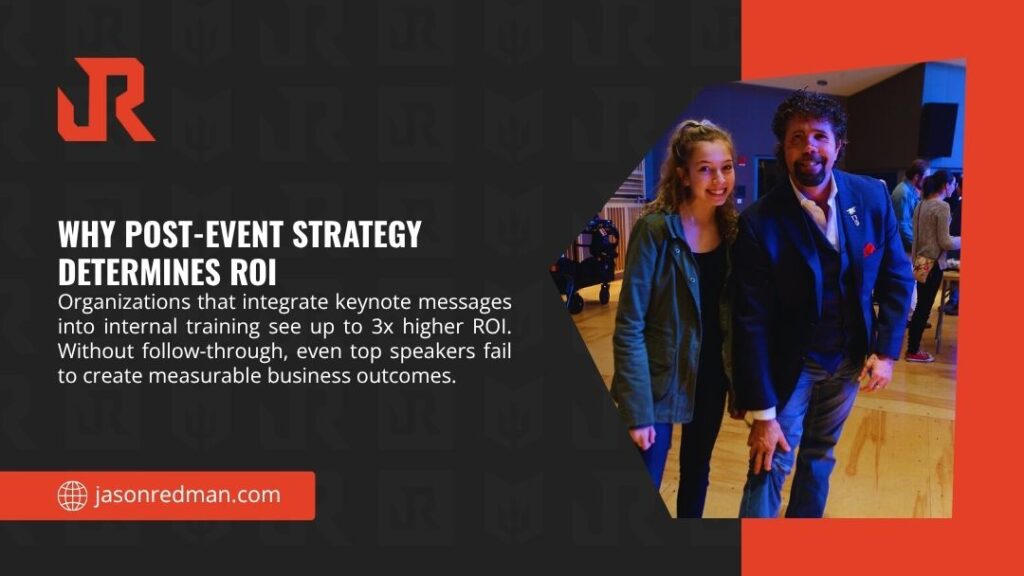
Of course, not every speaker delivers that level of value. That’s why understanding keynote speaker pricing helps set realistic expectations. In most cases, the real cost isn’t hiring the wrong speaker. It’s hiring the right one and failing to use their message effectively afterward.
Do keynote speakers actually matter?
Yes, do keynote speakers make a difference, but only when they are chosen with intention and used as part of a larger strategy.
A strong keynote speech can reshape perspective, align teams, and reinforce leadership at every level of an organization. It can shift how people think about challenges, decisions, and performance. That kind of impact doesn’t disappear when the event ends.
But here’s what often gets overlooked. The speaker alone is not the solution. The difference comes from the connection between the message, the audience, and the moment. When those elements line up, the results speak for themselves.
If you’re serious about creating that kind of impact, it starts with choosing a speaker who delivers more than inspiration. It starts with someone who brings clarity, experience, and real-world application to the stage.
Explore how a proven elite performance speaker can help your team move beyond motivation and start operating at a higher level.