


Most companies don’t struggle with planning events; they struggle with making those events matter. In this article, we break down hire speaker vs in-house presenter and explain which option actually drives leadership growth, engagement, and long-term results. We’ll also show where each approach works, and where it quietly fails.
Hire Speaker vs In-House Presenter
Before comparing outcomes, let’s define both clearly, because this is where most companies already get it wrong. An in-house presenter (internal staff) is someone from within your organization. A department head. A senior leader. Sometimes, a subject matter expert knows the business inside out. An internal presenter usually delivers familiarity, relevance to company data, and operational clarity.
On the other hand, a professional speaker is an external expert. A corporate speaker or keynote speaker whose job is not just to deliver information, but to change how people think, act, and lead. A professional speaker brings outside perspective, credibility, energy and presence, structured storytelling, and proven delivery under pressure.
Now here’s where things get interesting. The decision between hiring a speaker vs an in-house presenter often looks simple on paper. Internal equals cost-saving. External equals investment. But once you look beyond surface-level thinking, the picture changes.
Those are not small differences. They shape how your audience responds from the first minute.
| Element | In-House Presenter | Professional Speaker |
| Knowledge of the company | High | Moderate |
| Fresh perspective | Low | High |
| Authority perception | Moderate | High |
| Audience curiosity | Low | High |
| Message retention | Short-term | Long-term |
That last line, retention, is where most events either succeed or fade out.
What Really Happens with an In-House Presenter
An internal presenter has value. There’s no question about that. They understand the mission, the goals, and the day-to-day challenges. But familiarity has a cost.
| Performance Factor | In-House Presenter Reality |
| Authority perception | Seen as “one of us.” |
| Audience attention | Drops quickly |
| Emotional impact | Limited |
| Retention of message | Short-term |
| Behavior change | Rare |
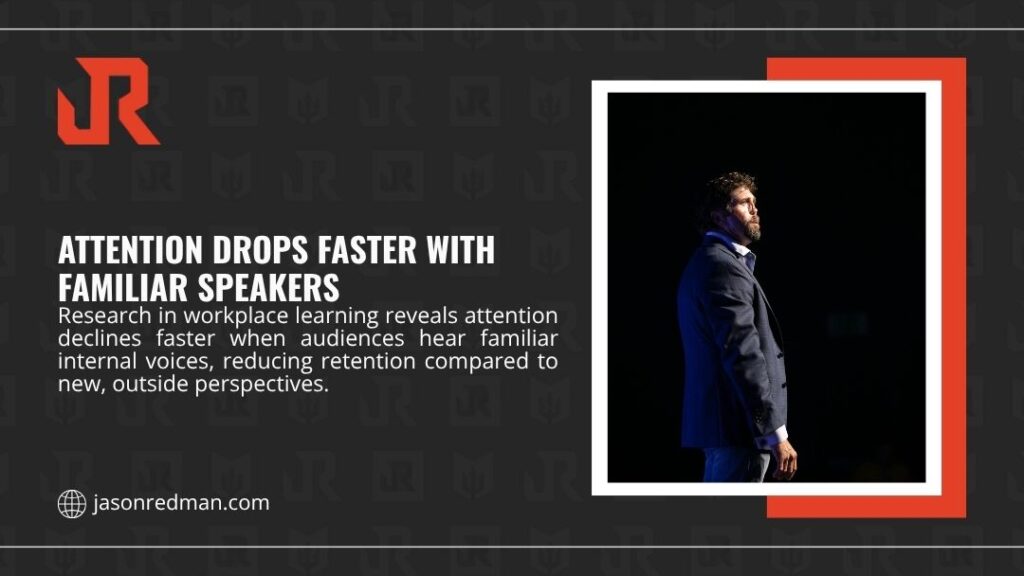
Even strong presenters struggle to hold the audience’s attention when the message feels predictable. It’s not about skill. It’s about exposure. Your team has already heard it.
Why Companies Choose to Hire a Speaker Instead
Companies don’t hire speakers because they lack internal talent. They do it because internal voices don’t always create movement.
Think about it. Your team hears from leadership every week. Same tone. Same structure. Same messaging style. After a while, even important ideas start to sound routine. That’s where bringing in a guest speaker changes the dynamic.
An external voice disrupts expectations. People lean in, not because the message is new, but because the messenger is. And that shift matters more than most leaders realize.
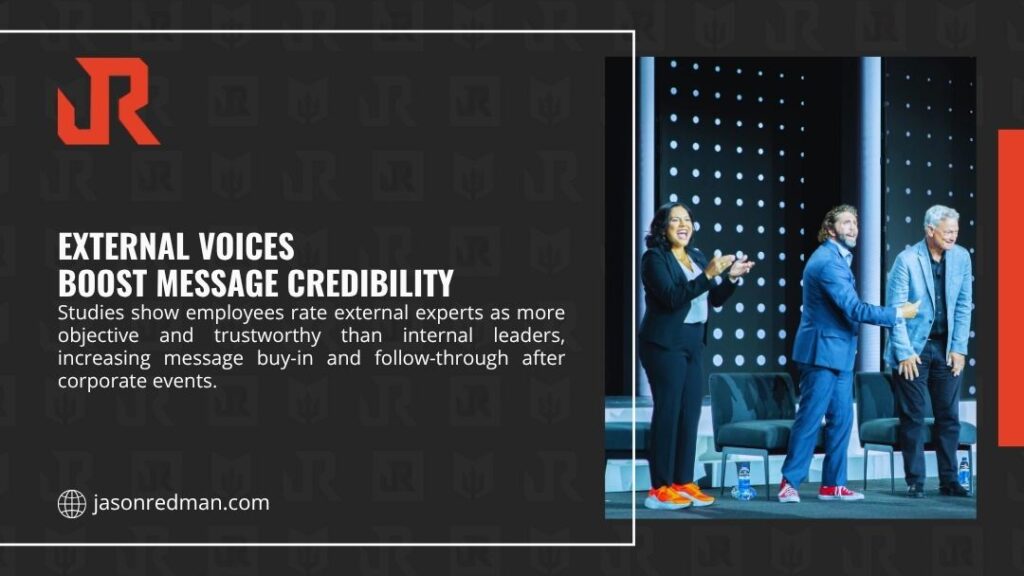
According to Harvard Business Review, external experts are often viewed as more objective and credible, which increases how seriously audiences engage with the message. That credibility gap is subtle, but powerful. It’s why companies exploring how to find a speaker for an event often move quickly once they understand the difference.
The Cost Conversation Most Companies Get Wrong
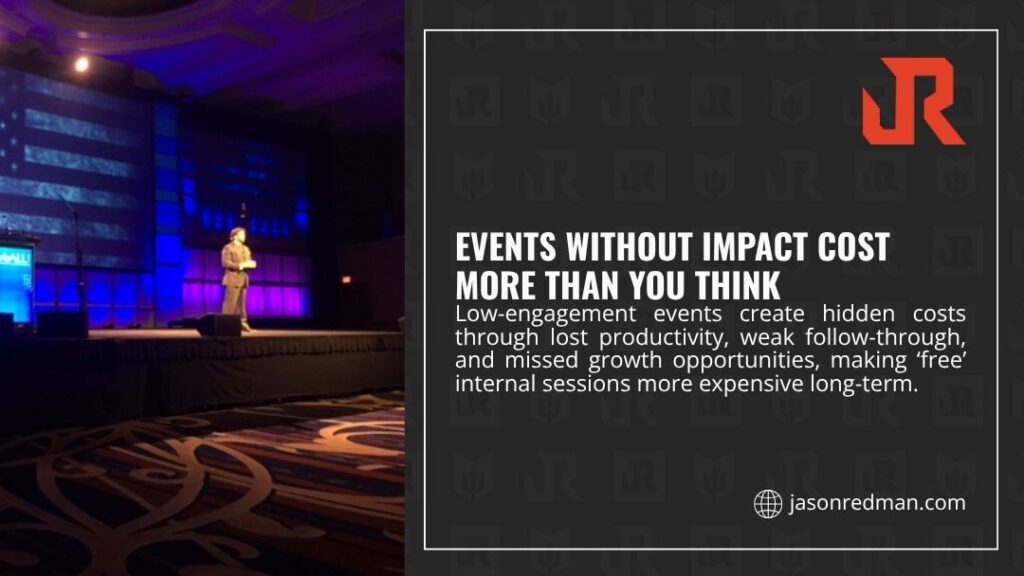
A lot of organizations hesitate here. They assume an in-house presenter is free. But nothing inside a company is free. Time has a cost. Missed engagement has a cost. Low-impact events have a cost.
| Cost Category | In-House Presenter | Professional Speaker |
| Direct investment | Low | Higher |
| Hidden cost | High | Low |
| Engagement return | Low | High |
| Long-term value | Minimal | Significant |
If you’ve ever looked into how much a keynote speaker costs, you’ve probably seen a wide range. But here’s what matters more. What does it cost when nothing changes after your event?
Engagement Is the Difference
Here’s where the gap becomes obvious. Most internal presenters aim to inform. Professional speakers aim to move people. That difference shows up in how audiences behave.
| Engagement Factor | In-House Presenter | Professional Speaker |
| Attention span | Drops early | Sustained |
| Emotional connection | Limited | Strong |
| Participation | Passive | Active |
| Message recall after the event | Low | High |
| Behavior change | Rare | Likely |
It’s not just about delivery skills. It’s about how the message lands. A seasoned speaker knows how to read a room. Adjust tone. Shift pace. Bring people back when attention slips.Internal presenters rarely train for that. That’s why companies looking to improve culture often explore the benefits of hiring a motivational speaker for corporate events before making a decision. Because engagement is not a bonus, it’s the whole point.
When an In-House Presenter Still Makes Sense
Not every situation requires an outside speaker. There are moments where internal voices are exactly what you need.
| Scenario | Best Choice |
| Operational updates | In-house presenter |
| Technical breakdowns | In-house presenter |
| Small team meetings | In-house presenter |
| Budget-restricted sessions | In-house presenter |
In these situations, familiarity works in your favor. But those aren’t the moments where transformation happens.
When Hiring a Professional Speaker Changes Everything
There are moments inside every organization where information isn’t enough. You don’t need updates. You need a shift. That’s when the hire speaker vs in-house presenter decision becomes clear.
Hiring a professional speaker changes everything when teams feel stuck or disconnected, leadership needs to evolve, morale has dipped, growth has plateaued, and culture needs direction.
In those moments, the right leadership speaker doesn’t just deliver content. They challenge assumptions. They bring clarity. They create urgency. And more importantly, they make people see themselves differently. That’s where change begins.
A Simple Decision Framework
Most companies overcomplicate this decision. You don’t need a complex model. You need clarity.
| Event Objective | Right Choice |
| Share information | In-house presenter |
| Inspire action | Hire speaker |
| Improve leadership | Hire speaker |
| Deliver updates | In-house presenter |
| Create lasting change | Hire speaker |
If your goal is growth, an outside perspective almost always wins.
The ROI Most Leaders Miss
Most leaders evaluate events based on immediate feedback. Did people enjoy it? Was the speaker engaging? But those aren’t the right questions. The real value shows up later.
Weeks after the event, conversations change, accountability improves, leaders step forward, and teams communicate better. That’s the return most companies miss in the hire speaker vs in-house presenter decision.
Because the impact doesn’t sit in the room, it carries forward. That’s also why companies often revisit how much it costs to book a professional keynote speaker after seeing real results. They stop thinking in terms of cost. They start thinking in terms of impact.
Choosing the Right Speaker Matters
Not every speaker delivers that level of impact. Some tell stories. Some are motivated for an hour. Then it fades. The right speaker does something different. They make the message stick.
If you’re evaluating options, it helps to understand what makes a good public speaker before you commit. You’re not just hiring someone to speak. You’re choosing someone who represents your message to your team.
Look for relevance to your audience, real-world experience, ability to connect across roles, and delivery that feels authentic, not scripted. Many companies also explore how to match a speaker to your audience to avoid mismatches that dilute the experience. Because the wrong speaker doesn’t just miss, it wastes the moment.
Why High-Performing Companies Don’t Leave This to Chance
Companies operating at scale, especially those doing $10M+, rarely rely on internal presenters for major events. They’ve learned something through experience. Growth doesn’t happen by repeating the same message in the same voice. It happens when people hear something that hits differently.
That’s why many organizations turn to proven speakers through Jason Redman’s official speaking programs, where leadership lessons are grounded in real-world experience and delivered in a way that resonates across teams.
This approach isn’t about motivation alone. It’s about helping individuals become stronger, more accountable, and more effective under pressure. And when individuals improve, the company follows.
If You Want Your Event to Actually Matter
Here’s the truth most companies don’t say out loud. A lot of events are forgotten within days. Not because they weren’t well organized, but because nothing truly changed.
If your goal is to pass along information, an internal presenter can handle it. But if your goal is to create momentum, shift mindset, and push people forward, the hire speaker vs in-house presenter decision becomes simple.
You bring in someone who can create that shift. Because information fills time. But the right message changes direction.
FAQs
What is the main difference between a speaker and an in-house presenter?
An in-house presenter shares internal knowledge, while a professional speaker focuses on changing mindset, improving performance, and creating lasting impact.
Is hiring a speaker worth the cost?
Yes, when the goal is engagement, leadership growth, or culture change. The long-term impact often outweighs the initial investment.
When should I choose an in-house presenter instead?
When the session is highly technical, operational, or requires deep internal knowledge.
Do keynote speakers really make a difference?
Yes. Studies and corporate feedback consistently show higher engagement and retention when external speakers are used effectively.
Are professional speakers only for large companies?
No, but companies with larger teams tend to benefit more due to scale and engagement challenges.
What industries benefit most from hiring speakers?
Corporate, tech, finance, sales, and any organization focused on leadership and performance improvement.
Can a speaker improve team morale?
Yes. The right message, delivered well, can reset the mindset and improve morale significantly.
Ready to Bring That Kind of Impact to Your Team?
If your event demands more than information, if it demands change, then bring in a speaker who has led under pressure and delivers when it matters most. Book Jason Redman and give your team a message they won’t ignore, and won’t forget.
Or, if you’re ready to move forward, learn how to book a speaker who doesn’t just speak, but creates real change inside your organization. Because when your people become stronger, more disciplined, and more focused. Your entire company moves forward with them.