


Feeling stuck and thinking I don’t know what to do with my life is not a personal failure. It is a signal. Across cultures and age groups, a lot of people reach moments where the usual scripts stop working, and the question becomes unavoidable: What am I doing with my life, and where do I go from here?
This article addresses that question without platitudes. It explains why this feeling happens, what research shows about purpose and decision-making, and how to move forward with clarity instead of panic.
Why “I Don’t Know What to Do With My Life” Feels So Heavy
When someone says I don’t know what to do with my life, they are rarely confused simply. The weight comes from several forces hitting at once. Modern life offers more choices than any generation before, yet fewer stable pathways.
Research on decision fatigue shows that excessive options increase anxiety and reduce satisfaction, even when people choose well, according to findings published by the American Psychological Association. Add social comparison, economic pressure, and constant exposure to curated success stories, and uncertainty turns into self-doubt.
Major life transitions amplify this feeling. Graduation, job loss, relocation, divorce, or caregiving responsibilities often remove external structure. Without structure, identity questions surface fast. Many people describe this stage as feeling lost, even when nothing is objectively “wrong.” The discomfort is not laziness or lack of ambition. It is the brain trying to reconcile goals, values, and reality at the same time.
What You Feel vs. What It Often Means
| What You’re Experiencing | What It May Indicate | First Helpful Response |
| Feeling numb or unmotivated | Burnout or emotional overload | Reduce pressure before making decisions |
| Constant overthinking | Fear of choosing wrong | Narrow choices instead of expanding them |
| Envy of others’ paths | Misaligned values | Clarify what actually matters to you |
| Restlessness at work | Stagnant career path | Test alternatives without quitting |
| “I have no idea what I’m doing.” | Identity shift | Allow exploration without judgment |
A Quick Reality Check Before You Pick a Direction
Before asking what I do with my life, it helps to confirm that the problem is not physiological or psychological overload. Chronic sleep deprivation, untreated anxiety, and depression all distort decision-making.
The National Institute of Mental Health notes that depression often presents as indecision and loss of interest rather than sadness, especially in adults. If you feel persistently hopeless, detached, or unable to function day to day, professional support matters more than any life plan.
This is not about labeling yourself. It is about protecting your capacity to choose. Clarity rarely appears when the nervous system stays in survival mode.
What Is My Purpose, Really?
Many people ask what my purpose in life is, as if the answer exists somewhere fully formed. Research suggests the opposite. Purpose develops through action, not introspection alone. A widely cited Stanford study on purpose development shows that people who treat purpose as something built over time experience less anxiety than those searching for a single defining passion.
Purpose in life usually emerges from repeated behaviors that feel meaningful, useful, or responsible to others. It evolves with age, context, and responsibility. The belief that there is one correct life path often causes paralysis. A more accurate question is not what my purpose but what kind of problems am I willing to work on repeatedly?
A Five-Part Method to Answer “What Should I Do With My Life?”
This framework avoids dramatic reinvention. It focuses on evidence, constraints, and forward motion.
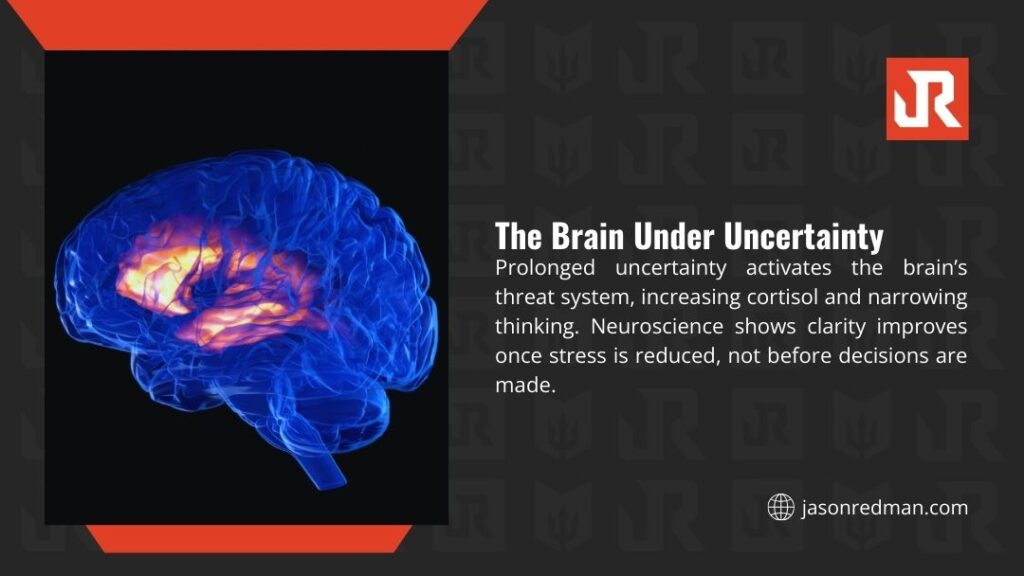
Part One: Track How You Spend Your Time
Instead of asking what I want to do with my life, start with observation. Over one week, note how you spend your time and energy. Patterns reveal more truth than aspirations. Activities that quietly absorb attention often point toward meaningful directions.
Part Two: Values Before Goals
Goals change. Values remain more stable. Studies from the University of Pennsylvania’s Positive Psychology Center show that values-aligned action correlates more strongly with long-term satisfaction than goal achievement alone. Identify three non-negotiable values, such as autonomy, contribution, or mastery, and evaluate decisions against them.
Part Three: Strengths and Constraints
Ignoring constraints leads to regret. Money, location, health, and family obligations shape what is realistic right now. At the same time, strengths often appear in plain sight. People regularly underestimate skills they use daily because those skills feel normal. Combining strengths with constraints narrows options productively.
Part Four: Experiments Over Commitments
When someone says I don’t know what to do, the safest response is not commitment but experimentation. Short courses, volunteer projects, job shadowing, or temporary roles allow learning without identity lock-in. Research on career exploration shows that people who test options report higher confidence even when experiments fail.
Part Five: Choose Based on Tradeoffs
Every path carries a cost. Decision clarity improves when you choose based on acceptable tradeoffs rather than perfect outcomes. This approach reduces rumination and increases follow-through. Meaning grows when effort aligns with values, not comfort.
Comparing Directional Options
| Path Option | Time Cost | Financial Risk | Skill Growth | Meaning Potential |
| Career pivot | Medium | Medium | High | High |
| New role, same field | Low | Low | Medium | Medium |
| Further education | High | High | High | Medium |
| Start a business | High | High | Very High | High |
| Job redesign | Low | Low | Medium | Medium |
| Reset or sabbatical | Medium | Medium | Low | Medium |
If You Don’t Know What Career You Want, Start Here
Career confusion drives many searches for what to do with my life. The data shows that most people do not follow linear paths. The U.S. Bureau of Labor Statistics reports that the average worker changes careers multiple times, not just jobs. Broad roles such as project manager, operations coordinator, analyst, or customer success manager attract career switchers because they reward transferable skills.
Instead of asking what I want to do for a living, ask what type of work environment suits you. Do you prefer problem-solving, coordination, or creation? Do you want autonomy or structure? These questions produce clearer answers than job titles.
What to Do When You Don’t Know What to Do Right Now
When uncertainty spikes, decision-making shuts down. The most effective response is not planning but grounding. Reducing input, taking a walk, writing one page, or having one honest conversation restores clarity. Research from Harvard Medical School confirms that even brief physical movement improves cognitive flexibility during stress. Doing something small breaks the loop of paralysis. Momentum often precedes motivation, not the other way around.
A 30-Day Plan When You Keep Thinking “I Don’t Know What to Do With My Life.”
Long-term clarity forms through short-term structure. A defined time frame reduces pressure and replaces vague intention with measurable movement.
The following 30-day framework creates momentum without demanding certainty. It prioritizes learning over commitment and clarity over speed.
A One-Month Reset Framework
| Week | Focus | Actions | Evidence of Progress |
| Week 1 | Awareness | Time audit, values reflection | Clearer patterns |
| Week 2 | Exploration | Three low-risk experiments | New information |
| Week 3 | Skill sprint | Short course or project | Confidence growth |
| Week 4 | Decision | Choose the next 90-day direction | Reduced anxiety |
This structure mirrors evidence-based behavior change models used in organizational psychology and leadership development programs worldwide.
Leadership, Accountability, and Direction When Life Feels Stuck
Personal direction strengthens when accountability enters the picture. Leadership research consistently shows that progress follows ownership, not motivation. Leadership platforms emphasize responsibility as a stabilizing force rather than a burden. His work on personal accountability explains why clarity improves once excuses disappear.
Confidence also plays a role. Training confidence as a skill, not a trait, changes how decisions feel. Guidance on confidence development highlights repetition and feedback over self-belief alone. For some, working with a professional guide helps shorten the loop between confusion and action. Advice on choosing a life coach focuses on alignment, not inspiration.
Structured programs like the Overcome Mindset course and the Pointman for Life framework exist for people who prefer guided structure over trial and error.
Common Questions People Ask When They Feel Lost
People who feel disoriented often search the same questions repeatedly, not because they want reassurance, but because they want permission to move forward without having everything figured out. Search behavior shows that uncertainty usually clusters around timing, comparison, and fear of irreversible mistakes.
One of the most common questions is whether it is normal to feel lost even when life appears stable. Developmental psychology research from Harvard’s Study of Adult Development suggests that periods of dissatisfaction often arise not from failure, but from growth outpacing identity. When values shift faster than routines, confusion follows.
Another frequent concern centers on age. Many ask whether it is “too late” to change direction. Workforce data from the Organisation for Economic Co-operation and Development indicates that mid-career transitions have increased globally over the past two decades, particularly among professionals seeking better alignment rather than higher pay. Directional change is no longer an exception; it is increasingly the norm.
People also ask whether the purpose must relate to work. Studies published show that purpose in life often stems from roles outside employment, such as caregiving, mentoring, or making creative contributions. Work can support purpose, but it does not have to define it.
Another quiet question many people hesitate to ask is whether feeling lost means they lack ambition. In reality, research on motivation suggests the opposite. High internal standards combined with uncertainty often create paralysis. The desire to choose “correctly” prevents choosing at all.
People also wonder how to tell the difference between normal uncertainty and a mental health concern. Clinical guidance notes that when indecision is paired with persistent fatigue, withdrawal, or loss of interest that persists over weeks, support should take priority over self-direction exercises.
A final question that surfaces repeatedly is whether clarity should come before action. Behavioral science consistently shows that clarity follows engagement. Action reshapes identity faster than introspection alone.
A Practical Next Step You Can Take Today
If you keep telling yourself I don’t know what to do with my life, stop waiting for clarity and start building it. Pick one action you can complete this week that moves you slightly forward, not forever forward. Direction comes from engagement, not overthinking.
Commit to one structured input that forces perspective. That might mean studying real-world leadership experiences through Jason Redman’s books, learning how accountability changes outcomes by understanding personal responsibility under pressure, or working with performance-focused coaching designed to replace confusion with action.
Do not aim to solve your entire future. Aim to prove to yourself that you can move. Momentum creates confidence, and confidence turns uncertainty into choice. Start now, choose something real, and let action think for you.