


Public speaking techniques matter because confidence alone does not carry a message. This guide breaks down public speaking techniques you can apply before, during, and after a talk. You’ll learn how to shape a message, handle nerves, use body language, and run speaking practice that actually improves your public speaking skills.
Why Public Speaking Techniques Matter?
Public speaking techniques work best when they behave like a system, not a lucky streak. That’s the first thing most people miss. They chase confidence and hope it shows up on stage, but confidence in public speaking usually arrives after you use public speaking techniques that lower uncertainty: you know what you’ll say, why it matters, how to say it, and what to do when something goes sideways.
Here’s the thing: fear of public speaking is not rare, and it’s not a character flaw. Chapman University’s Survey of American Fears (2025 key findings) lists fear of public speaking at 33.7% of respondents. That’s a lot of adults quietly panicking over a microphone. So yes, you’re normal. Now let’s make you effective.
Public speaking techniques sit on three pillars: preparation, delivery, and recovery. Preparation shapes the message. Delivery shapes the moment. Recovery shapes your long-term growth, which is how you get better at speaking without burning out. Put those together, and you get public speaking techniques that improve presentation skills and public speaking confidence at the same time.
If you’re looking to really understand the difference between someone who simply speaks in public and someone who truly owns the room, it comes down to a few core traits. A good speaker can deliver information clearly.
A great one connects, adapts, and leaves an impression that sticks. That’s where a deeper baseline definition of what makes a good public speaker becomes useful, not as a checklist, but as a way to recognize the skills that turn words into influence and presence into impact.
Why public speaking feels scary (and what fear actually does)
But here’s the problem: when nerves spike, your body acts like you’re about to get chased, not introduced. Heart rate climbs. Breathing turns shallow. Your voice thins out. Your brain starts protecting you by narrowing attention, which is a polite way of saying it can blank on the exact line you rehearsed.
This is why public speaking techniques need to be physical as well as mental. You can’t talk your way out of stress physiology. You have to change inputs.
The preparation framework that makes delivery easier
Public speaking techniques begin long before you walk out. The fastest way to improve public speaking is to reduce improvisation where it hurts and keep it where it helps. In other words, you script the structure, and you free the delivery.
A good public speech starts with a one-sentence outcome. If you can’t say what you want the audience to think, feel, or do when you finish, you’ll end up with a talk that covers a topic but doesn’t move anyone. This single sentence also acts like a filter: anything that doesn’t serve it gets cut.
Once you have the outcome, pick the simplest spine for the talk. Many public speaking techniques boil down to one reliable structure: point, proof, meaning. Make a claim. Show evidence or a story. Explain why it matters. Repeat. That pattern keeps presentation skills sharp because it prevents wandering.
How to write a good speech without sounding scripted
People don’t hate scripts. They hate sounding scripted. Public speaking techniques fix this by separating language from logic. You can plan your logic tightly while keeping your language flexible.
Write your talk like this: create an outline, then write only three things word-for-word. First, the first two sentences. Second, the transition into your main point. Third, the last two sentences. That’s it. Everything else becomes prepared conversationally, which is where good presentation skills live.
When you do write lines, write them as you speak. Shorter sentences. Cleaner verbs. Fewer qualifiers. If your sentence can’t survive being read aloud, it probably doesn’t belong in a live talk.
Ways to start a speech that don’t feel corny
Most people overthink the opening and underthink the map. A strong opener earns attention, but the map earns trust. The best public speaking techniques use both.
You need two jobs done in the first minute: signal relevance and signal competence. Relevance tells the audience, “This is for me.” Competence tells them, “This person can take me somewhere useful.”
Here are three opening patterns that work across speaking engagements, training presentations, and executive speech settings.
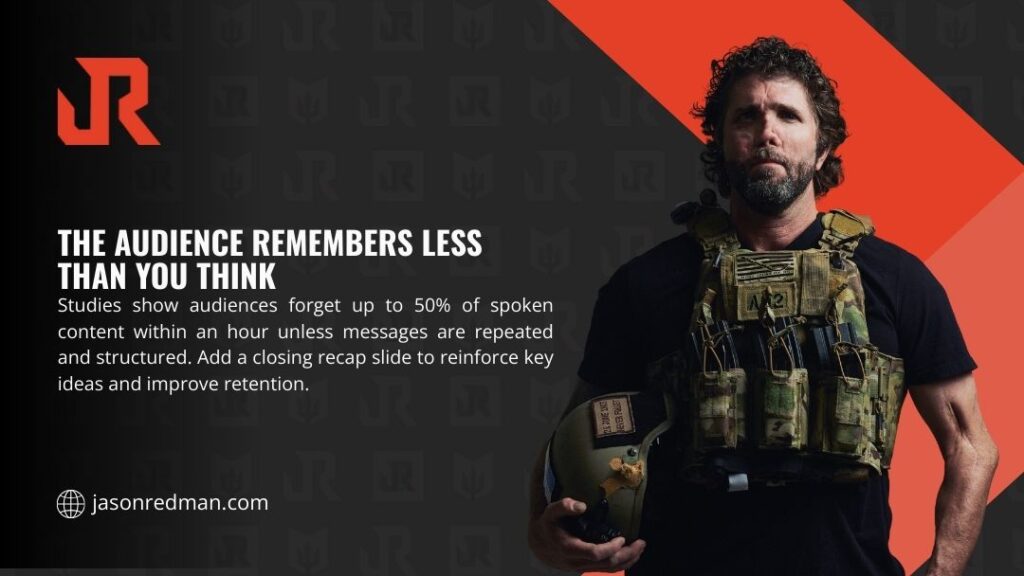
Opening patterns that work in real rooms
| Opening type | Best when you need | Risk to avoid | A clean template |
| Problem–Promise–Proof | quick buy-in for a practical audience | sounding salesy | “Most teams struggle with X. Today you’ll leave with Y. Here’s why I know it works…” |
| Story with boundaries | trust, attention, and emotional credibility | over-sharing | “A few years ago… Here’s the part that matters for you…” |
| Data-led opener | urgency and clarity for decision-makers | data dump | “One number explains why this matters… Here’s what it changes…” |
When you start a speech this way, public speaking techniques feel less like performance tricks and more like clear communication.
Presentation techniques that keep people with you
Presentation techniques should do two things at once: keep attention and reduce cognitive load. That’s why the simplest tools win.
| Presentation Technique | What It Looks Like in Practice | Why It Works |
| Signposting | Using phrases like “Here’s what changed,” “The second point,” or “So what this means is…” | It helps people stay oriented. When listeners know where they are and what’s coming next, they don’t mentally check out. |
| Contrast | Showing a clear shift: before vs. after, problem vs. solution, old way vs. improved way | The brain wakes up when it senses change. Contrast creates momentum and keeps attention alive. |
| Specificity | Sharing concrete examples, numbers, or real scenarios instead of vague advice | Details stick. General ideas fade fast, but specific information gives people something to remember and repeat. |
| Simplicity | Focusing on fewer ideas instead of cramming everything in | Less mental effort means better understanding. People follow along instead of struggling to keep up. |
| Logical Flow | Each point naturally leads into the next | A smooth structure reduces cognitive load and makes the message feel effortless to follow. |
These techniques work best when layered together, especially alongside solid public speaking tips that focus on clarity over performance.
Body language that reads as calm and credible
Body language is not decoration. It’s part of the message. Public speaking techniques that ignore body language create mixed signals: your words say calm, your body says alarm.
Start with eye contact with the audience. Many speakers scan so quickly it looks like panic. Others lock onto one person and forget the rest of the room. The middle path is better: hold eye contact for a full thought, then move. Think in zones, not faces. Left, center, right. Then repeat.
Hands matter because they broadcast intent. If your hands disappear, you look guarded. If your hands flail, you look uncontained. Public speaking techniques for hands are simple: keep them visible, use them to mark transitions, and let them rest when you’re not making a point.
Body language cues that change how you’re perceived
| Cue | What the audience assumes | Quick correction |
| Fast scanning eye contact | nerves, uncertainty | hold contact through one sentence |
| Hands below the waist | guarded, low energy | bring hands to mid-torso level |
| Weight shifts every few seconds | discomfort | plant, then move with purpose |
| Head down to notes too often | lack of connection | use a “glance, speak, return” rhythm |
These public speaking techniques also work on camera. For virtual talks, camera eye contact replaces room eye contact. It feels weird at first, but it reads as confidence to viewers.
Voice and speaking skills that make you easier to follow
If your voice is hard to follow, you can have great content and still lose the room. Public speaking techniques for voice target three things: pace, pauses, and emphasis.
A credible pace tends to sit around the range that many studies explore in comprehension research. A 2016 academic paper reviewing speech rate research notes classic findings around word rates in the 160–165 wpm neighborhood and the importance of variation. It’s not a strict rule, but it supports a practical target: aim for clear, then vary pace on purpose.
Now, the punchline: pauses do more than slow you down. They create authority. A short pause before a key line signals that this matters. A pause after a key line gives the audience time to absorb it. Many public speaking techniques for delivery are really public speaking techniques for silence.
If you’re working on how to speak clearly, focus on consonants and the ends of words. Under stress, speakers swallow endings. You don’t need theatrical diction. You need crisp endings.
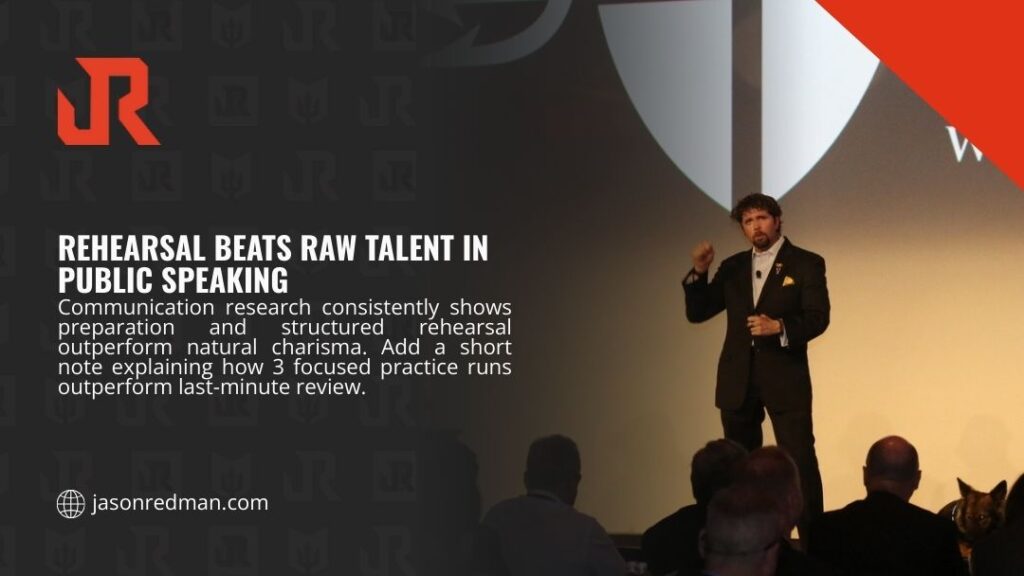
How to speak in public confidently when you feel shaky
How to speak in public confidently is a common search because people hope confidence is a switch. It’s not. It’s a routine.
| Step | What to Do | Why It Helps |
| Slow breathing | Take slow, steady breaths for about two minutes before you start | This settles your nervous system and reduces the physical symptoms that make you feel shaky. |
| Physical reset | Roll your shoulders back, unclench your jaw, and let your hands rest naturally | Releasing tension sends a signal to your body that you’re safe, not under threat. |
| Attention shift | Silently remind yourself: “I’m here to serve the audience, not to impress them.” | Moving focus outward lowers self-consciousness and makes confidence feel more natural. |
Confidence in public speaking doesn’t show up all at once. It builds through small, repeatable habits like this routine, especially when paired with practical ways to learn how to be confident without forcing it.
What to do if you blank mid-speech
Blanking happens to experienced speakers. Public speaking techniques for recovery matter because they prevent a wobble from becoming a collapse.
When you blank, don’t apologize repeatedly. One calm line works: “Let me put that more clearly.” Then go back to the last sentence you remember and restate it. That restatement often triggers the next point. If it doesn’t, use your map: “I’ve covered the problem. Next is the solution.” Then continue.
This is also why public speaking techniques should include a visible, simple outline you can glance at. Not a script. A map.
Speaking practice that actually improves fast
Speaking practice is where most advice gets lazy. People say practice more and move on. But speaking practice can mean anything: reading your slides, mumbling in the shower, or doing focused reps that change real speaking skills.
Public speaking techniques improve fastest when practice has constraints and feedback. Two constraints help: time limits and recording. Feedback comes from listening back, not from your feelings in the moment.
A good drill is the one-minute summary. Explain your talk in one minute. If you can’t, your structure is not clean yet. Another drill is the no-notes run: deliver your key points without looking. You’ll discover where logic gaps exist.
Practice drills that build real public speaking skills
| Drill | Time | What it trains | How to score it |
| One-minute talk | 5 minutes | clarity, structure | can you hit outcome + 2 points? |
| Record a 3-minute segment | 10 minutes | pace, filler words | count “um/like,” check speed |
| No-notes run of key points | 10 minutes | recall, confidence | Can you keep the flow without panic? |
| Q&A roleplay | 10 minutes | composure under pressure | Do answers return to your message? |
These public speaking techniques also help people who want to improve their English speaking. Recording forces you to hear what listeners hear, which is often different from what you assume you sound like.
Visual aids for speech (slides that support you, not replace you)
A visual aid for speech should clarify one idea at a time. Slides fail when they become a teleprompter. Public speaking techniques for slides are simple: fewer words, bigger text, one message per slide. If you need more detail, put it in a handout, not the projected screen.
For charts, choose the simplest view and narrate what matters. People can’t read a dense chart while listening to you. Presentation best practices treat slides as support, not as the star.
If you’re working on good presentation habits for leadership teams, this becomes even more important. Executives don’t want “more slides.” They want clearer thinking.
Q&A, interruptions, and tough rooms
Q&A reveals whether your public speaking techniques are real or cosmetic. Handling questions well signals confidence in public speaking, even when the question is sharp.
When you get a tough question, start by repeating it in cleaner language. That buys time and shows respect. Then answer in two parts: direct answer first, context second. If someone tries to hijack the talk, you can acknowledge and redirect: “That’s an important point. For today, I want to stay on the core problem.” Then return to your map.
Public speaking techniques for time control matter here. If you run long, your close becomes rushed, and the audience remembers the rush. Plan to close early and protect it.
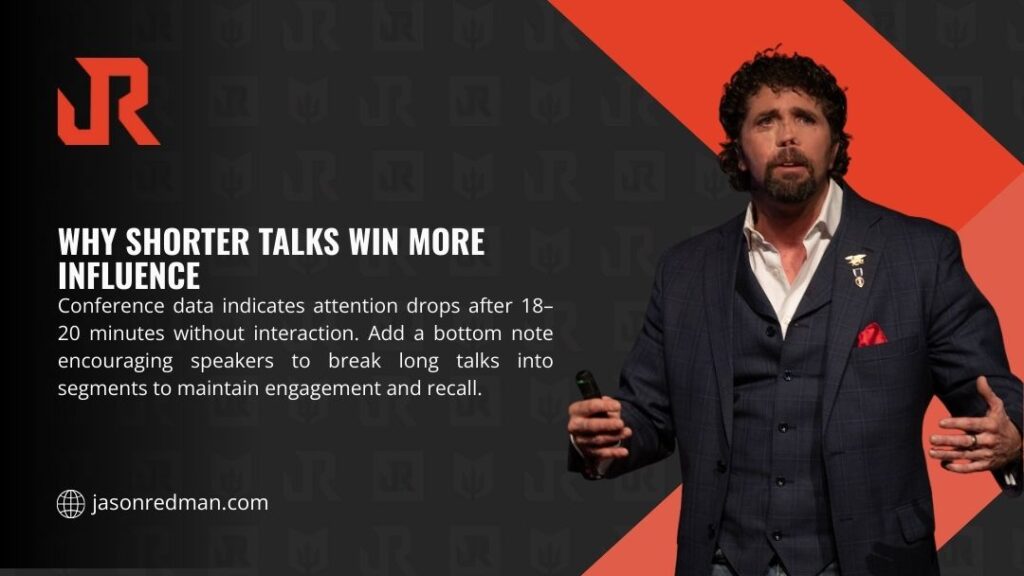
How to get better at public speaking long-term
How to get better at public speaking is not about one heroic performance. It’s about your after-action review.
After every speaking engagement, answer three questions. What landed? What dragged? What confuses people? Then make one change before the next talk. Not ten. One.
If you want more help with how to improve public speaking skills in a professional setting, performance coaching can speed up the process because someone else sees what you miss.
If you also want a course-based approach, the Overcome Mindset course and the Pointman for Life course are built around resilience and execution, which translate directly into speaking with confidence when the stakes feel high.
Conclusion
Public speaking techniques work when you stop treating them like tricks and start treating them like habits. If you want the cleanest next step, pick one talk you give often, apply these public speaking techniques to the structure, and run one week of focused speaking practice with a recording. That alone can change how you sound.If you’re ready to go further, explore Jason Redman’s broader library on public speaking and his guidance on how to improve public speaking for a step-by-step approach that stays practical. And if you’re planning an event and want a proven public speaker who teaches resilience and leadership under pressure, take a look at how to book a speaker so you know what to ask for and what to expect.